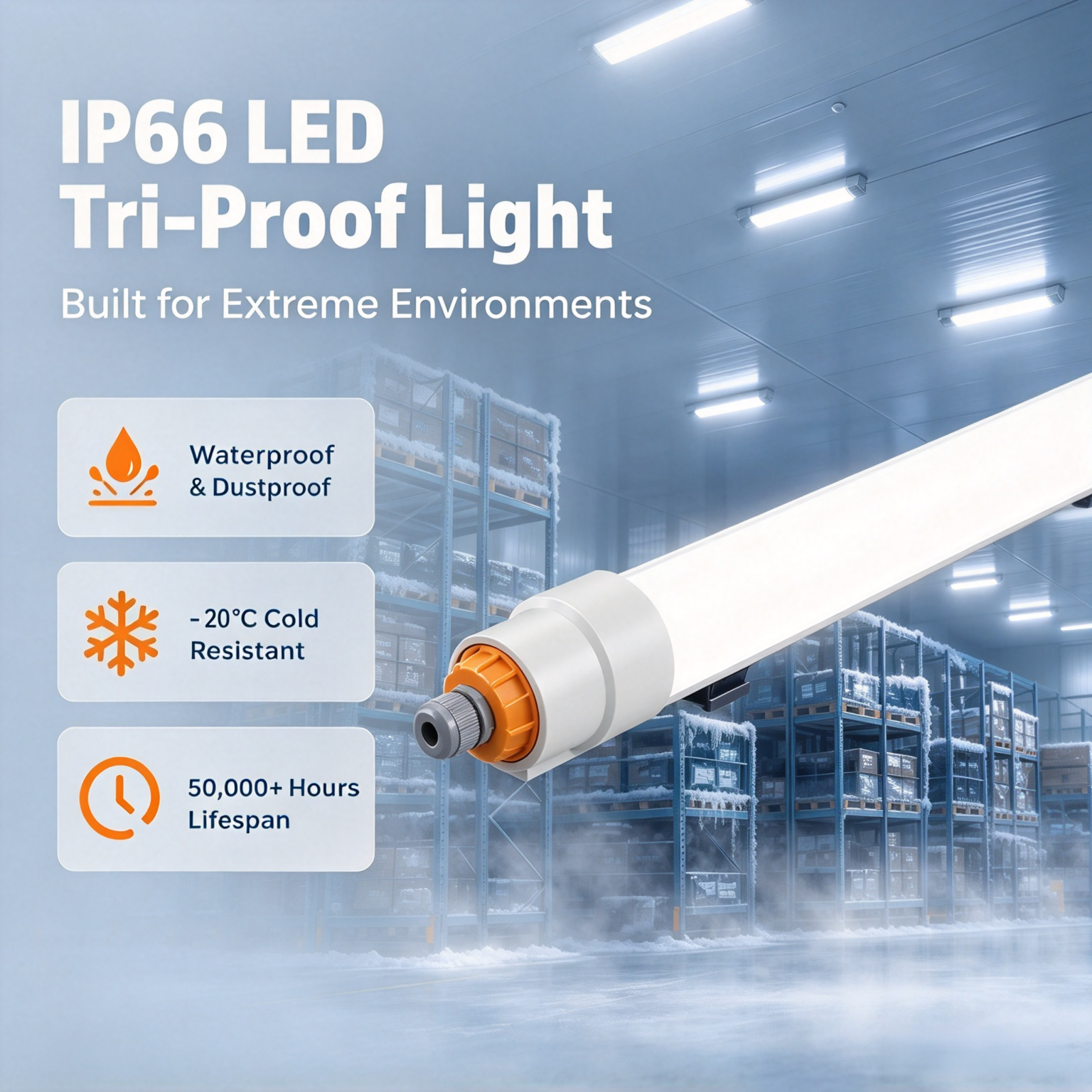
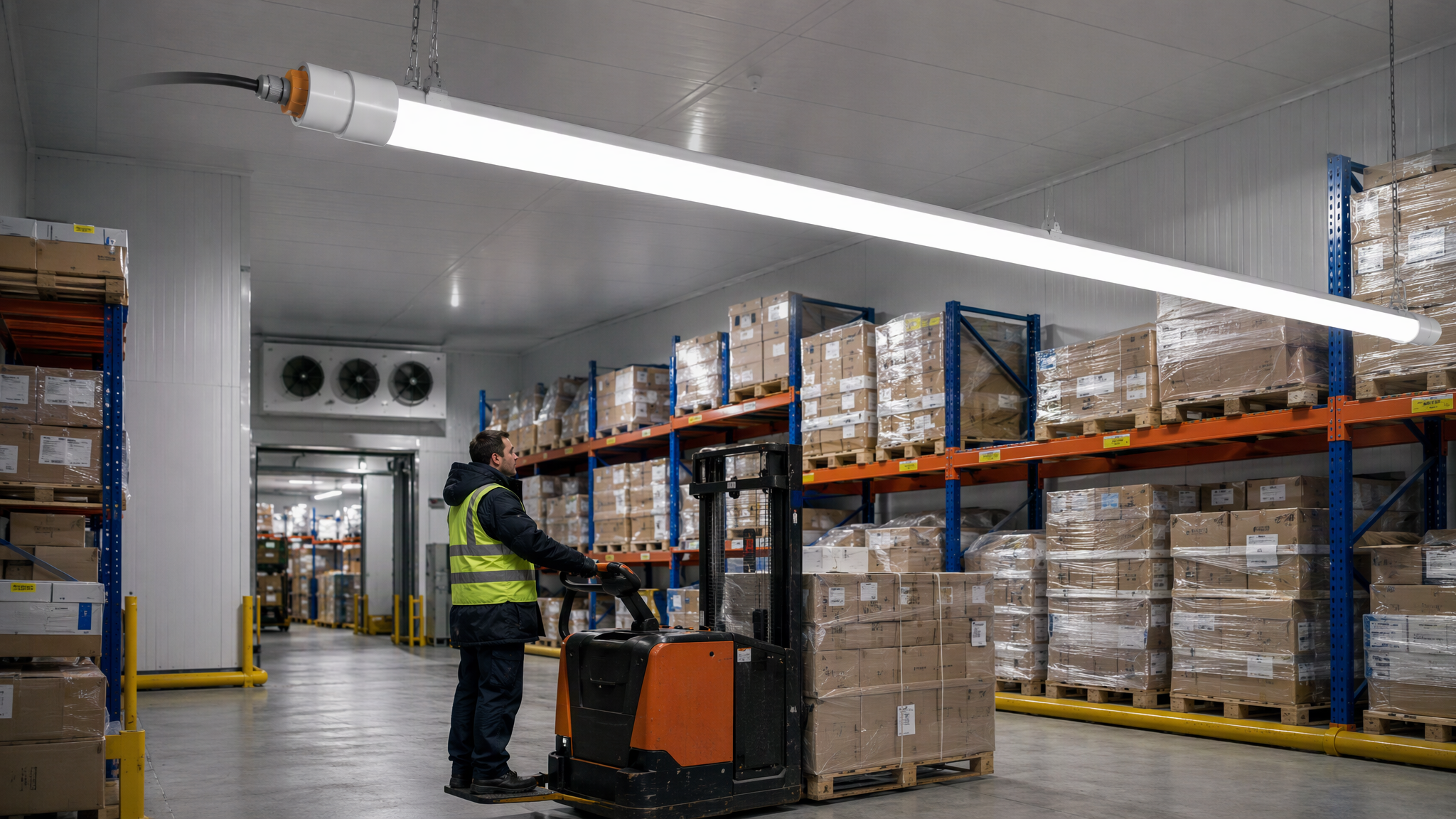
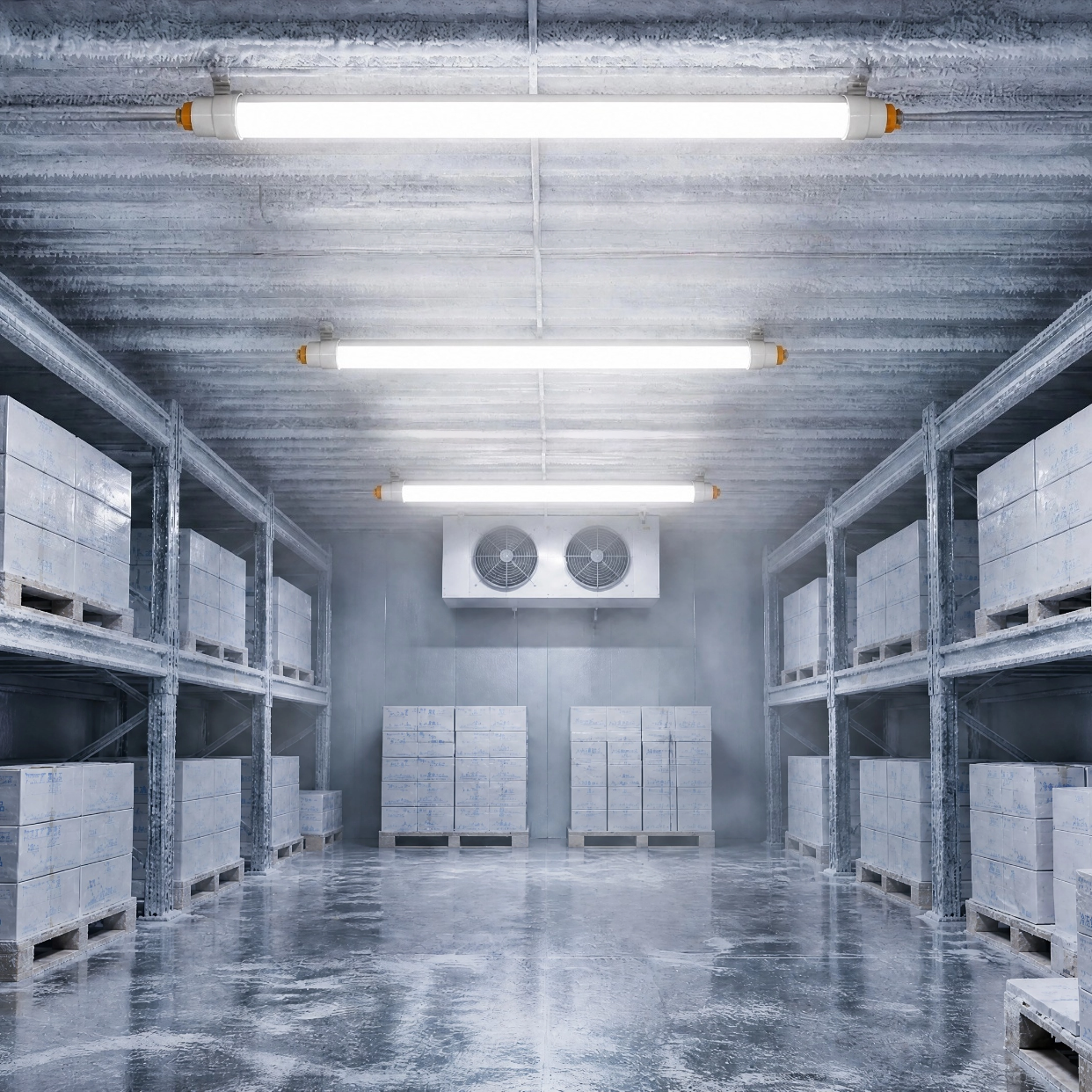
🧊 Cold Storage Lighting: Why IP65 Tri-Proof Lights Fail (And How to Specify Them Right)📅 November 9, 2026 | 📂 Application Guide | ✍️ Gotall Technology Engineering Team 📌 Introduction: The Cold Storage Lighting Problem Nobody Talks AboutWalk into any cold storage facility and look up. You will likely see a familiar sight: LED tri-proof lights that were installed less than two years ago, already showing signs of failure. Some flicker intermittently. Others have lost significant brightness. A few have stopped working entirely. The contractor who installed them specified “IP65 tri-proof lights”—a specification that looks correct on paper. So why do they fail? The answer is uncomfortable but important: most cold storage lighting failures are not caused by “bad products”—they are caused by selecting the wrong product for the wrong environment. This article examines the three most common failure modes in cold storage lighting, explains why they happen, and provides a practical specification framework that contractors can use to avoid them.
⚠️ Failure Mode 1: Driver Failure at Low TemperaturesWhat happens: Fixtures install fine, but within weeks or months, individual units begin to flicker or fail to start. When the fixtures are opened, the driver shows signs of damage—swollen capacitors, burned components, or complete failure. Why it happens: Most standard LED drivers are rated for operation down to -20°C or -25°C. But inside a freezer room, the ambient temperature can drop to -30°C or lower, especially near evaporators and during defrost cycles. At these temperatures, the electrolyte in electrolytic capacitors becomes viscous, reducing capacitance and causing the driver to malfunction. Repeated cold starts—each time the door opens or the defrost cycle ends—accelerate wear on the driver’s components. What to specify: Look for drivers rated for operation at -40°C or lower. Ask for the driver‘s cold-start test data—not just its operating temperature range on a datasheet. Premium brands like Tridonic and OSRAM publish detailed low-temperature performance data. At Gotall, our engineering team can provide driver specifications and cold-start test results for any fixture we supply. 💡 Practical tip: A fixture rated for -20°C operation is not suitable for a freezer room that occasionally drops to -30°C. Always specify based on the lowest temperature the fixture will ever experience—not the average operating temperature. 💧 Failure Mode 2: Sealing Failure Due to Thermal CyclingWhat happens: Moisture appears inside the fixture’s diffuser. Frost forms on the interior surfaces. Over time, water droplets accumulate near the driver and LED board, causing corrosion and short circuits. Why it happens: Cold storage environments experience constant temperature cycling—doors open and close, defrost cycles run, and warm, humid air enters the space. Every time the temperature changes, the materials in the fixture expand and contract at different rates. Over thousands of cycles, this thermal stress can cause gaskets to deform, screws to loosen, and sealing integrity to degrade. The hidden problem: A fixture can pass an initial IP65 test and still fail in service. The test measures performance under controlled conditions—not under the constant thermal cycling of a real cold storage environment. This is why “IP65 certified” is not the same as “IP65 suitable for cold storage”. What to specify: Look for fixtures with:
💡 Practical tip: Ask the supplier for the IP test report—not just the certificate. The test report will show the test conditions, including whether the fixture was subjected to thermal cycling before the IP test.
🔦 Failure Mode 3: Lumen Depreciation and Color ShiftWhat happens: The fixtures still work—but the light is dimmer than when they were installed. In some cases, the color temperature has shifted noticeably, with some fixtures appearing cooler or warmer than others. Why it happens: Cold storage environments combine two factors that accelerate lumen depreciation: low ambient temperatures (which can actually cause over-driving if the driver is not thermally compensated) and high humidity (which accelerates degradation of LED phosphors and optical materials). Poor thermal design also causes LED junction temperatures to rise during operation, further reducing lifespan. What to specify: Look for:
💡 Practical tip: Ask for the LM-80 test report for the specific LED chip used in the fixture. This report shows how the LED performs over time at different temperatures—and is the only reliable basis for lifespan claims. ✅ Gotall‘s Cold Storage Solution: TP025 SeriesThe TP025 Series IP65 Waterproof Tri-Proof Light was designed with these failure modes in mind. Key features relevant to cold storage applications include:
Available in 600mm (20W), 900mm (30W), 1200mm (36W), and 1500mm (45W) configurations with 2200–4950lm output at 110lm/W, the X38-TP025 is purpose-built for the demanding conditions of cold storage, freezer rooms, and commercial kitchens.
📋 Cold Storage Lighting Specification ChecklistUse this checklist when specifying or evaluating LED lighting for cold storage and freezer room applications:
📌 Conclusion: Specify for the Environment, Not the DatasheetCold storage lighting failures are preventable—but only if the specification process goes beyond “IP65” and “50,000 hours.” The key is to specify for the actual environment the fixture will operate in: the lowest temperature it will experience, the thermal cycling it will endure, and the maintenance access constraints of the facility. At Gotall Technology, we work with contractors to specify the right product for the right application—not just to sell a fixture. Whether you are sourcing custom LED tri-proof lights for a freezer room, LED batten lights for a dry warehouse, or industrial lighting solutions for a mixed-use facility, our engineering team can help you get the specification right the first time. 📩 Need help specifying lighting for a cold storage project? Contact our engineering team for application-specific recommendations and test documentation. 📧 [email protected] | 🌐 www.gotalltech.com
|

 EN
 AR
 BG
 HR
 CS
 DA
 NL
 FI
 FR
 DE
 EL
 IT
 KO
 NO
 PL
 PT
 RO
 RU
 ES
 SV
 TL
 ID
 LV
 LT
 SR
 SK
 SL
 VI
 SQ
 ET
 GL
 HU
 TH
 AF
 GA
 CY
 IS
 HY
 AZ
 MN