❓ LED Tri-proof Light Sourcing Guide: 12 Questions Every Project Contractor Should Ask Before Ordering from China📅 September 14, 2026 | 📂 Procurement FAQ | ✍️ Gotall Technology Engineering Team Sourcing LED tri-proof lights and LED batten lights from China is a standard practice for global buyers. But standard practice doesn't always mean safe practice. Every year, projects experience delays, budget overruns, and product failures because critical questions were not asked before orders were placed. This guide compiles 12 essential questions drawn from real procurement scenarios—questions that separate reliable LED lighting manufacturer China partners from those who merely claim to be one. Each question includes why it matters, what to look for, and how Gotall Technology addresses it. Use this as your sourcing checklist. Share it with your procurement team. Keep it handy when evaluating suppliers.  1️⃣ Is your company a manufacturer or a trading company?Why it matters: Trading companies cannot control production quality, cannot perform root cause analysis on defects, and cannot offer genuine customization. When you have a quality issue, a trading company passes your complaint to their factory—and they have no leverage over the factory's response. How to verify: Check the supplier's business license for terms like production or processing versus import/export. Visit the factory or request a live video tour of the production line. ✅ Gotall's answer: We are a manufacturer. Our 3,000㎡ facility in Shenzhen operates SMT production lines, in-house R&D, and a complete quality control chain. We welcome virtual or onsite factory tours. 2️⃣ What certifications do you hold—and can I see the actual test reports?Why it matters: A certificate image can be faked, borrowed, or expired. Only the full test report—with the exact model number, test conditions, and accredited lab stamp—confirms compliance. Without verified certifications, your products may fail customs inspection or be rejected by local authorities. What to look for: CE-LVD, CE-EMC, RoHS, and ISO 9001 are baseline requirements for most markets. For projects requiring higher protection, ask for IP and IK test reports from accredited labs (SGS, TÜV, Intertek). ✅ Gotall's answer: We provide CE-LVD (LCSB05065119S), CE-EMC (LCSB05065121E), RoHS, and ISO 9001 certifications. Full test reports are available upon request. We do not substitute components after certification without written approval. 3️⃣ What LED brand and drive current do you use—and are you binning the chips?Why it matters: Not all SMD2835 chips are equal. Reputable brands maintain tight color binning (SDCM < 5) and provide reliable L70 curves. Discount suppliers often use un-binned chips, resulting in visible color variation between fixtures. Driving LEDs at maximum current also shortens lifespan. What to look for: Ask for the specific LED brand, package type, operating current, and SDCM tolerance. Suppliers who cannot provide this information likely lack control over their supply chain. ✅ Gotall's answer: We use SMD2835 chips from reputable manufacturers with SDCM < 5 and operate them below maximum drive current to improve thermal margin. Binning records are available upon request. 4️⃣ What driver brand are you using—and can you guarantee no substitution?Why it matters: The driver is the most failure-sensitive component in any luminaire. Suppliers who switch to lower-cost drivers after quoting a project can dramatically reduce reliability and performance. Cheap drivers often lack over-temperature, over-current, and surge protection. What to look for: Get the driver brand and model in writing. Request a commitment that no substitution will occur without written approval. ✅ Gotall's answer: We use Tridonic, TCI, or BOKE drivers across our product lines. We do not substitute drivers after quotation without customer consent. 5️⃣ Can you provide IES/LDT photometric files for this exact model?Why it matters: Many suppliers quote LED chip lumens, not complete fixture lumens. Optical losses, thermal degradation, and driver inefficiency can reduce delivered lumens by 20–30%. Generic IES files used for several products are not reliable for project design. What to look for: Request the IES file for the exact fixture model. The file should show luminaire lumens (not chip lumens), beam angle, candela distribution, and measurement conditions. ✅ Gotall's answer: We provide complete photometric data for every fixture—including lumen output at the specific CCT you are ordering. IES files are available for all standard models. 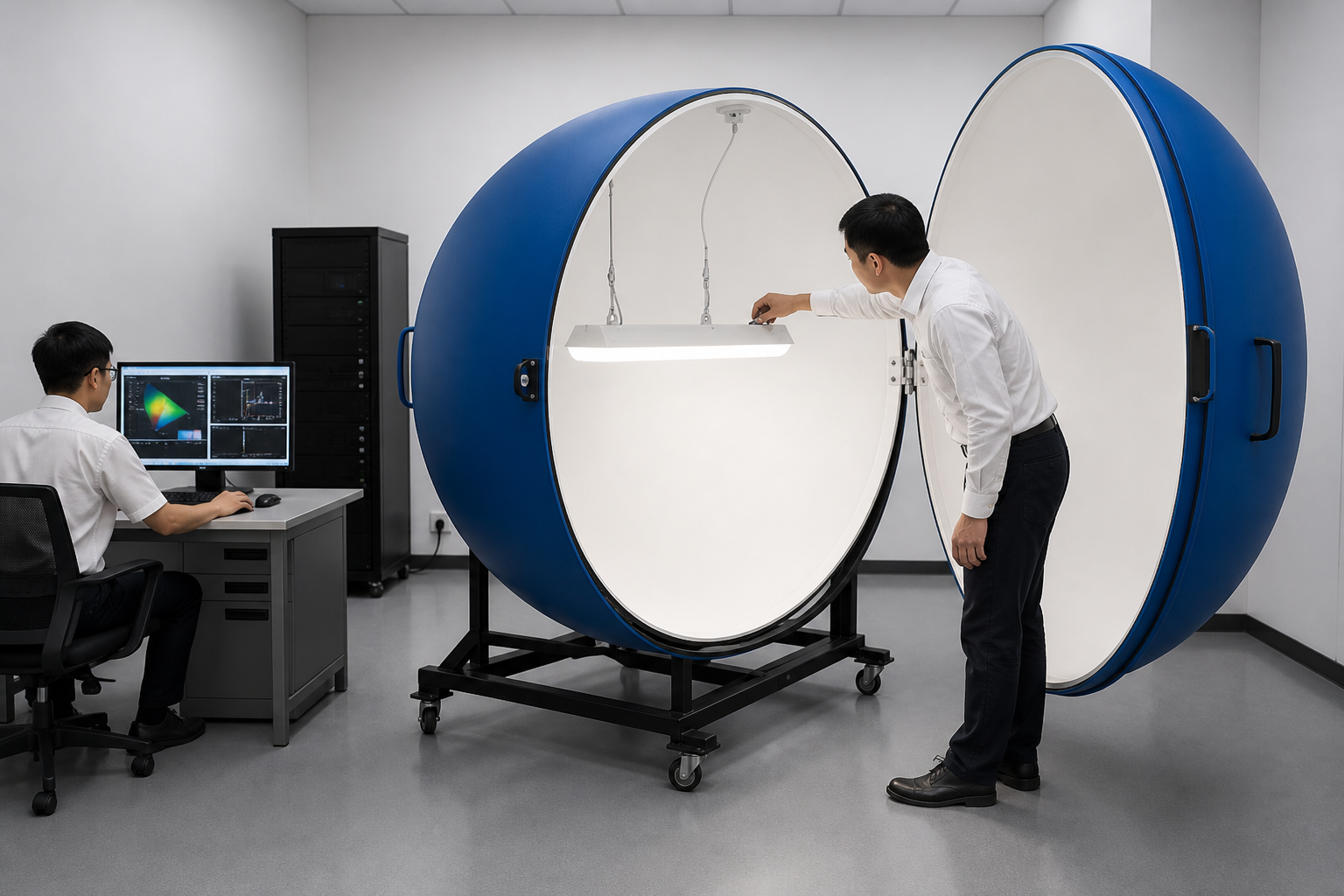 6️⃣ What IP and IK ratings do you offer—and are they certified by a third-party lab?Why it matters: Many suppliers claim IP65 or IP67 protection without actual testing. Inferior products only have simple dust and water resistance—without professional sealing, water vapor and fine dust will penetrate the lamp body, leading to short circuits and premature failure. What to look for: Ask for IP and IK test reports from an accredited lab (SGS, TÜV, Intertek). IP65 provides dust-tight + water-jet protection; IK08 provides 5J impact resistance; IK10 provides 20J. ✅ Gotall's answer: Our tri-proof lights are IP65/IK08 certified with full test documentation. For higher protection, we offer IP67/IK10 options with complete certification. 7️⃣ What is your typical lead time—and can you handle urgent orders?Why it matters: Project delays cascade—a two-week production delay can mean a two-month shipping delay, missed occupancy dates, and penalty clauses. Flexible production capacity is essential for urgent projects. What to look for: Look for on-time delivery rates above 97% and response times under 2 hours—these indicate strong operational discipline. Ask if the supplier maintains buffer capacity for urgent orders. ✅ Gotall's answer: Standard lead time is 15–25 days. We maintain buffer capacity for urgent orders and can expedite production when needed. Samples ship in 5–10 days. 8️⃣ What customization options do you offer—and what is the minimum order?Why it matters: Project requirements vary—emergency backup, microwave sensor, DALI dimming, specific CCT, or custom wattage. Suppliers who can only offer standard SKUs may force compromise on design. What to look for: Suppliers with in-house engineering teams can offer true customization—not just logo printing. Ask for specific examples of past customizations they have delivered. ✅ Gotall's answer: We offer emergency (3-hour backup), microwave sensor (5.8GHz, customizable holding time), DALI dimming (1-100%), CCT/wattage selectable, and linkable options. MOQ starts at 10 units for custom configurations. 9️⃣ What is your warranty—and what is actually covered?Why it matters: Many suppliers offer long warranties but exclude diffusers, require product return at customer expense, require registration, or have limiting run hours. A 5-year warranty is meaningless if the supplier expects you to pay return shipping from Singapore or Australia. What to look for: Get full warranty terms in writing. Check if components (drivers, sensors) are covered, who pays return shipping, and how claims are processed for international customers. ✅ Gotall's answer: We offer a 5-year warranty with straightforward coverage—including components and labor. We maintain 3-year spare parts stock for drivers, sensors, and key components. 🔟 How do you ensure color consistency across production batches?Why it matters: Color variation between fixtures is one of the most common complaints in LED projects. Two lamps both labeled 3000K can look visibly different if LED bin control is weak. In retail or office environments, even small color differences compromise project appearance. What to look for: Ask for SDCM tolerance (should be < 5). Request evidence of binning protocols and how the supplier maintains color consistency across different production runs. ✅ Gotall's answer: We maintain strict binning protocols with SDCM < 5 tolerance across all batches. Color consistency is verified during FQC testing. 1️⃣1️⃣ Can you provide references from similar projects in my region?Why it matters: A supplier's claims are only as credible as their real-world track record. A manufacturer who has successfully delivered projects in your region understands local voltage requirements (220-240V, 50Hz), certification requirements, and shipping logistics. What to look for: Ask for specific project references—including application, location, product used, and outcome. Suppliers with global reach (168+ countries) typically have documented case studies. ✅ Gotall's answer: We serve partners in 168+ countries and maintain case studies—including our Singapore warehouse retrofit (38% energy savings, 90-day implementation).  1️⃣2️⃣ What documents do you provide with shipment?Why it matters: Products that fail customs or authority inspection can cause costly delays. In many jurisdictions, lighting products must be accompanied by specific documentation—certificates, test reports, and compliance declarations—to clear customs. What to look for: Confirm that the supplier provides test reports, certificates, packing lists, and commercial invoices with every shipment. Verify that the model number on the certificate matches the product being shipped. ✅ Gotall's answer: We provide complete documentation with every shipment—certificates (CE, RoHS), test reports, packing lists, and commercial invoices. All documents are checked for model number consistency before shipping. 📌 Conclusion: Your Sourcing Checklist Starts HereThese 12 questions are not meant to be difficult for a qualified supplier—they are meant to expose gaps in transparency, quality control, and operational capability. A supplier who cannot answer these questions clearly is not yet ready for your project. At Gotall Technology, we welcome these questions—they give us the opportunity to demonstrate our engineering expertise, manufacturing capability, and commitment to quality. From product specifications to delivery schedules, we provide the transparency our partners expect. 📩 Ready to source your next industrial lighting solutions project? Contact our sales team to get all 12 questions answered with your specific project in mind.
|
 EN
EN
 AR
AR BG
BG HR
HR CS
CS DA
DA NL
NL FI
FI FR
FR DE
DE EL
EL IT
IT KO
KO NO
NO PL
PL PT
PT RO
RO RU
RU ES
ES SV
SV TL
TL ID
ID LV
LV LT
LT SR
SR SK
SK SL
SL VI
VI SQ
SQ ET
ET GL
GL HU
HU TH
TH AF
AF GA
GA CY
CY IS
IS HY
HY AZ
AZ MN
MN